Assisi Postcard
Notes From A Short Weekend In The City Of St. Francis

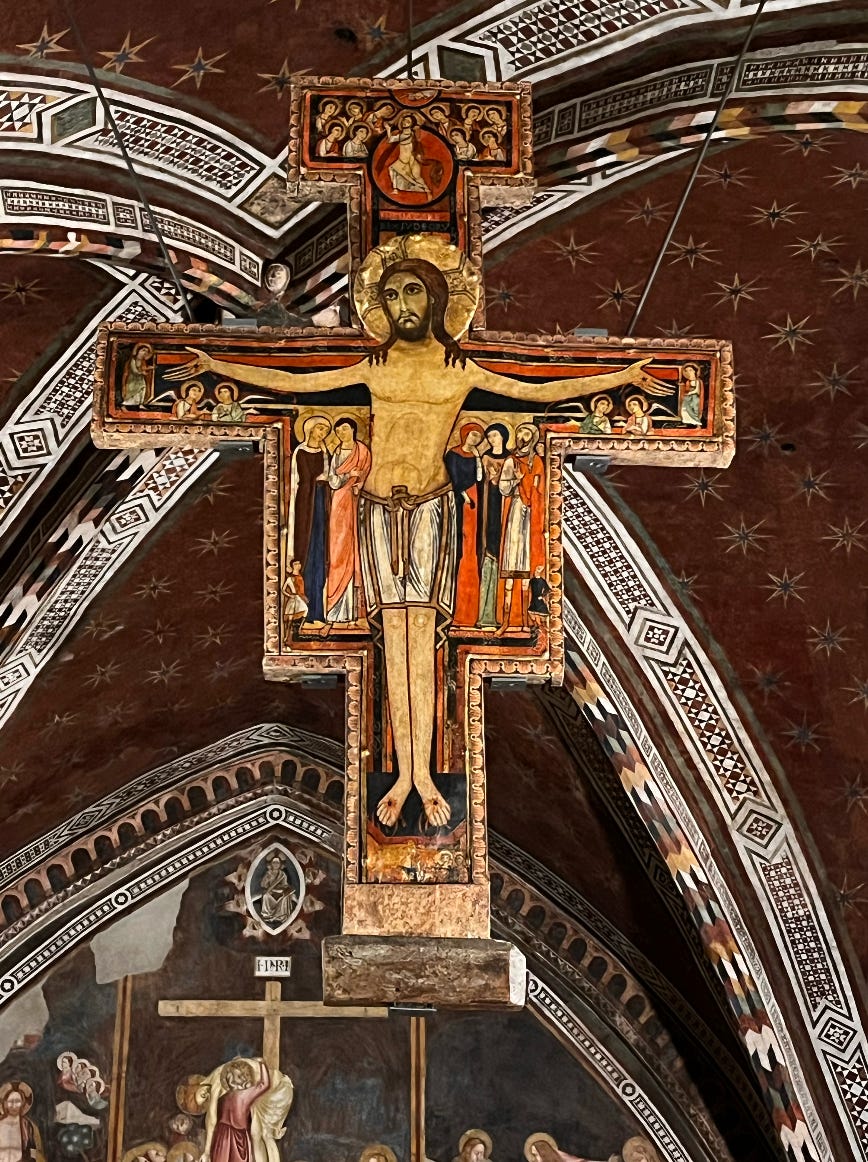
Everybody, it seems, has seen a replica of the San Damiano Cross, the crucified Christ before which Giovanni di Pietro di Bernadone — known to the world as St. Francis of Assisi — was standing when he first felt the Lord’s call (in a mystical vision, in which this Christ spoke to him) to rebuild his church. Well, the one you see above — that’s the real one! It’s displayed in the Basilica of St. Clare, Francis’s first female follower, in Assisi. It originally hung in a ruined church about two miles from Assisi, the chapel of San Damiano.
Francis interpreted Christ’s calling literally, and started begging alms to buy stones to repair that church, and others that had fallen into disrepair. One of them was the chapel of St. Mary of the Angels, also in the countryside near Assisi. That chapel became the first headquarters of the Franciscans. It is now inside the much larger church of St. Mary of the Angels. I prayed in it for about an hour on Sunday morning:
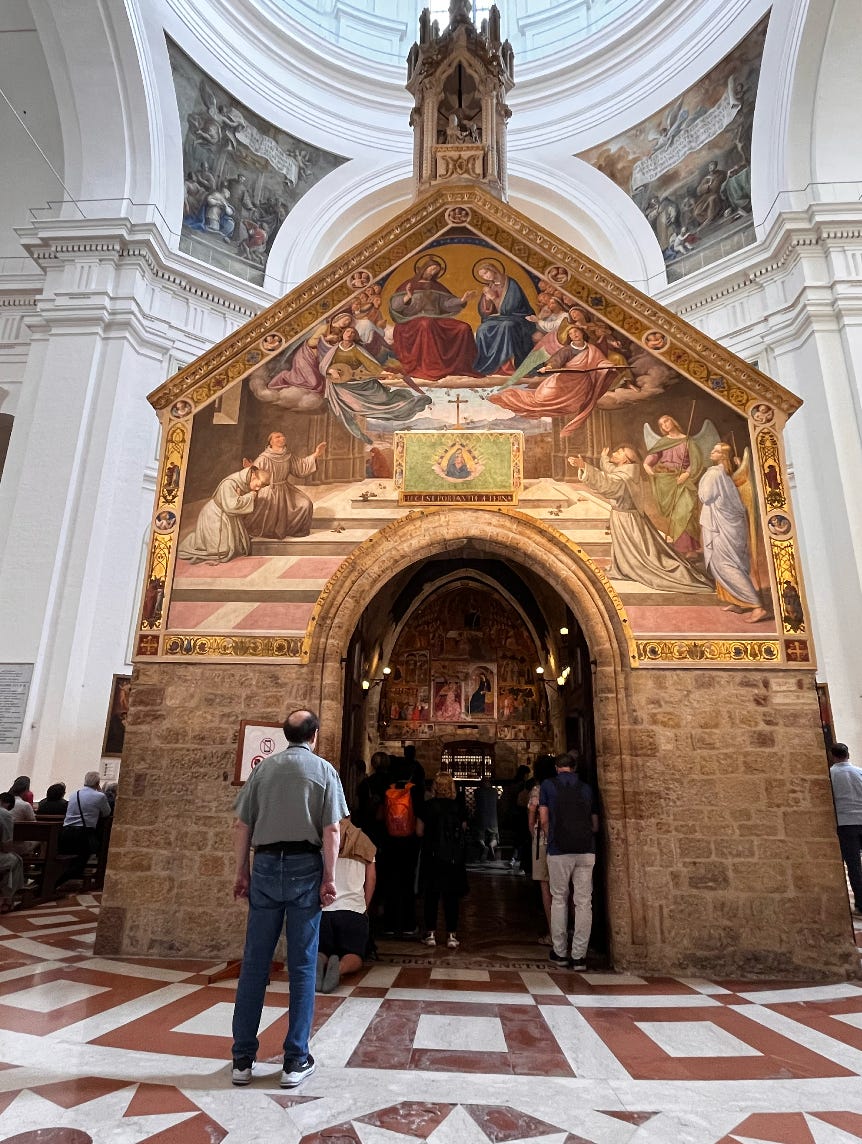
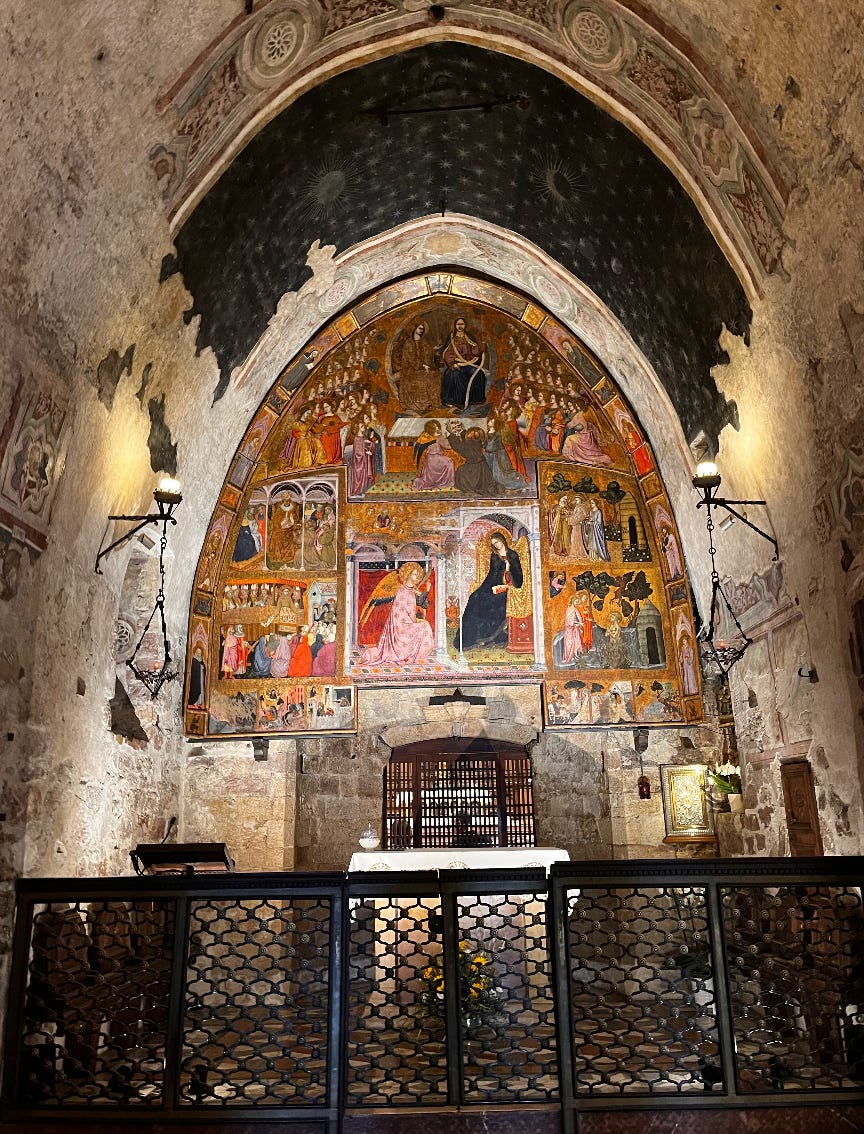
Here’s what it looks like on the inside. It’s breathtaking to know that the stones that you can touch were also touched by the hands of St. Francis himself:
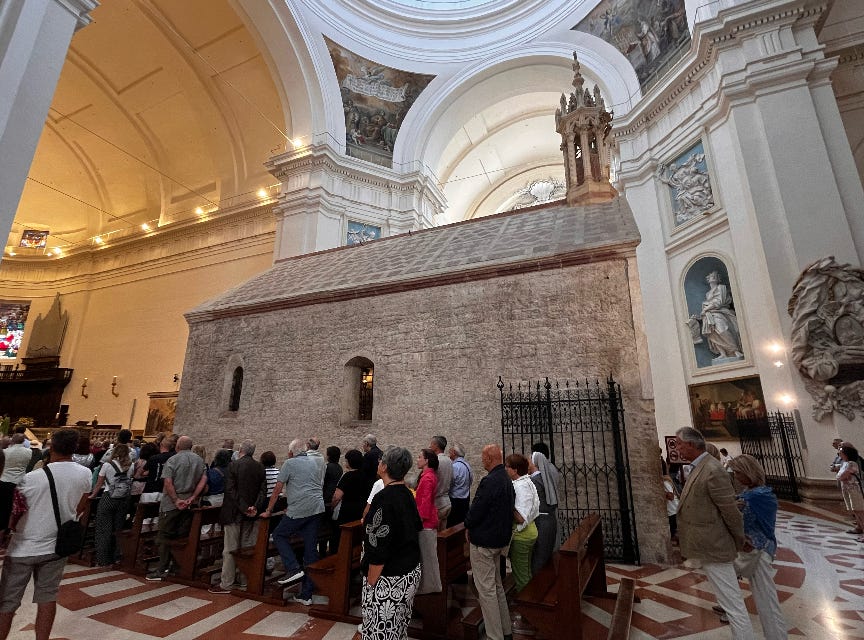
Here’s a side view, from inside the greater basilica. Francis spent his last days inside that chapel, and then died, in 1226, inside his cell, which is about 15 feet away, on the other side of the chapel as you see here:
I also went to the Basilica of St. Francis, built in the hill town of Assisi. You can’t take photos inside, which is a shame, because it is astounding! The ceilings and walls are resplendent with images from Giotto and Cimabue. I went into the crypt and prayed at Francis’s tomb. Yes, I know he’s a Catholic saint, not one of our Orthodox ones. I don’t care. That man knew the Lord. He was merciful to others, and prayed for the Lord’s peace for them. I need some mercy and peacemaking in my life.
There’s another part of that basilica where some relics are kept. We know all about Francis’s poverty, but nothing hits you like seeing his actual brown tunic, made of extremely rough wool, and patched all over. It makes the plain brown habits worn by today’s Franciscans look luxurious. There is also there the famous letter he gave to Brother Leo, an early companios, on the mountain of La Verna, after he received the stigmata late in life. Francis wrote this blessing in parchment to Brother Leo, and told him to keep the document next to his heart all his life — which he did.
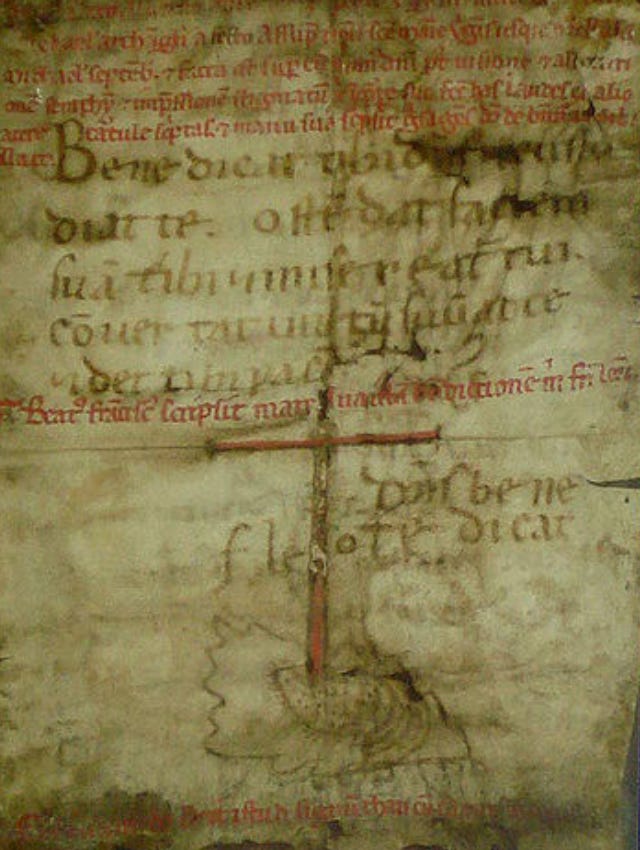
The “T” is the Tau cross that Francis liked to use as his signature. The blessing reads, “May the Lord bless and keep you; may He make His Face shine upon you and be merciful to you; may He turn His Countenance toward you and give you His Peace!”
It’s all there. It’s there for the faithful to see. Francis of Assisi was a flesh and blood man, as well as one of the greatest saints of the Latin church.
A confession: I have never really liked Francis of Assisi. It’s not his fault. It’s the way he has been packaged and presented in my lifetime as a kind of holy hippie. But because I was headed to Assisi for a conference, I figured I had better learn something about the great man. I am a fast reader, and began on the flight to Rome Francis of Assisi: A New Biography, by a Dominican named Augustine Thompson. I finished it as our car approached the outskirts of Assisi. The book is rather dry; I might have done better to read the G.K. Chesterton version. But I learned a lot about Francis and his time, and have a much better sense of why he was so great — and yes, holy.
Thompson said he learned from studying the life of Francis:
First, he taught me that loving God is something that remakes the soul, and doing good for others follows from this; it is not merely being good to others. Francis was more about being than doing. And the others whom the Christian serves are to be loved for themselves, no matter how unlovable, not because we can fix them by our good works. Second, rather than a call to accomplish any mission, program, or vision, a religious vocation is about changing one’s perception of God and creation.
That sounds to me rather Orthodox in its spiritual approach. In fact, reading about Francis, I thought he sounded a lot like the Russian Orthodox concept of the “holy fool,” or “fool for Christ” — a person who at times seems mad to the outside world, because of his unconventional behavior (usually embracing radical poverty), but who God is using mysteriously to reveal something about Himself.
Thompson says one thing that separates Francis from contemporary reformers is that he had no particular plan or program to address the ills he wished to heal. He simply prayed for people. “His greatest sermon was simply his own life.”
More:
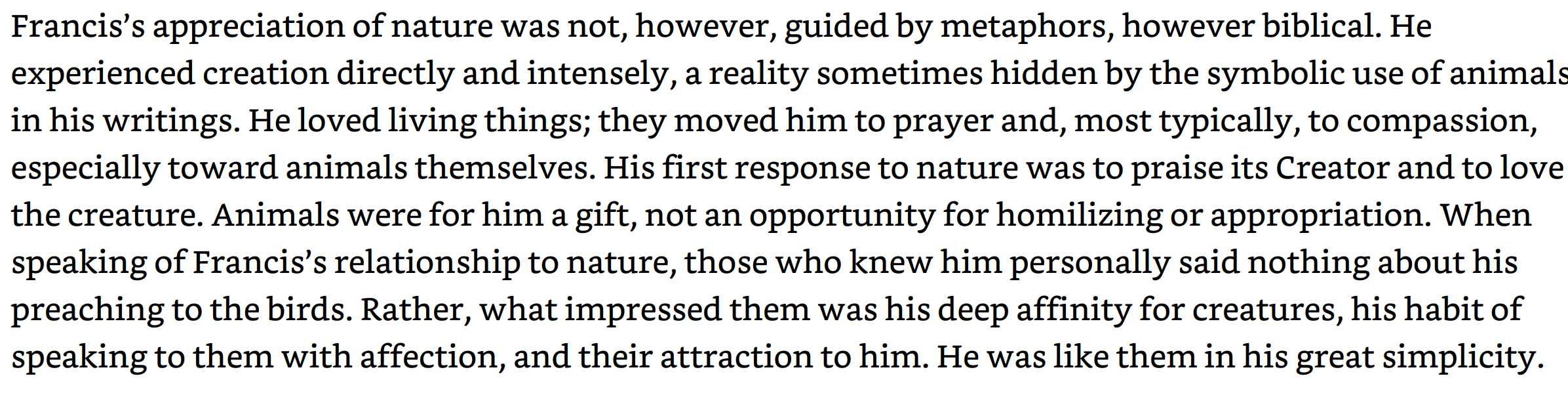
Francis’s mysticism was centered on the belief that he could have direct contact with God, not so much in nature or in the poor, but in the Eucharist. He was extremely concerned with the sanctity of the Eucharist, and chastised priests who treated it with insufficient reverence.
He also held the Word of God to be sacrosanct. I have to paste this long passage in from my notes, because the copy-and-paste function on my laptop isn’t working:
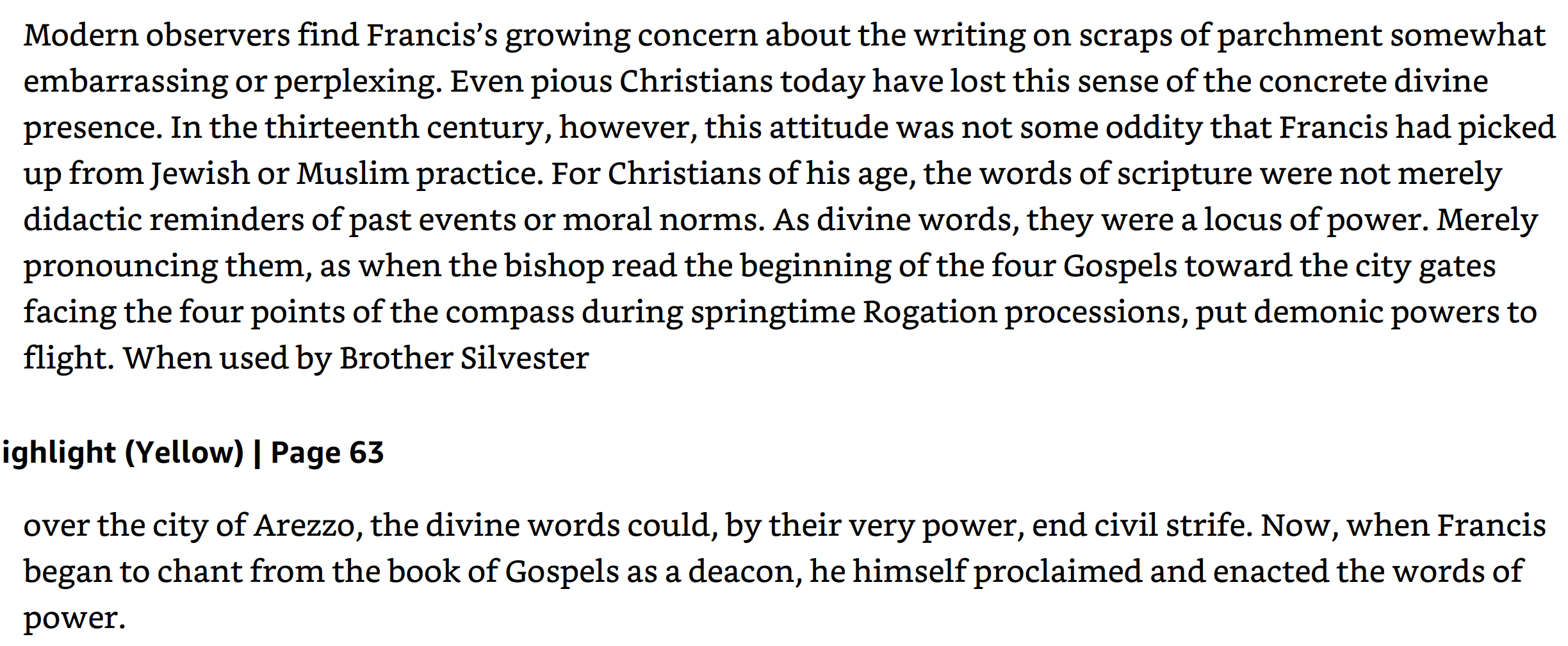

Boy oh boy, is this ever useful in my new book project! More:
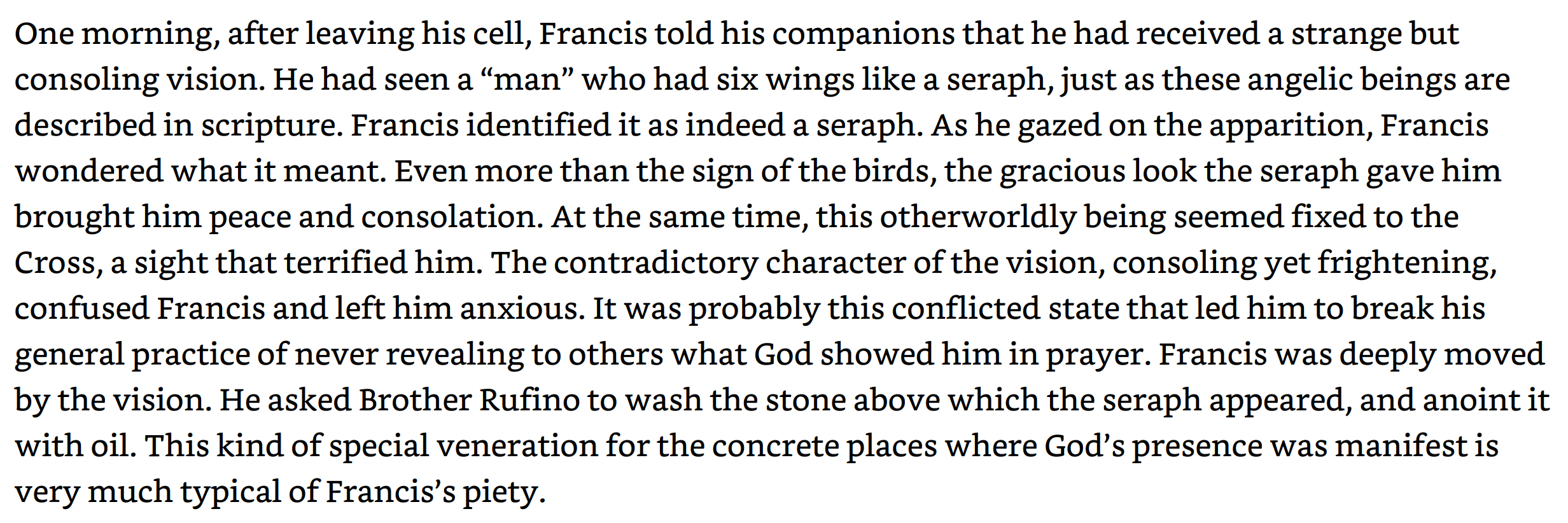
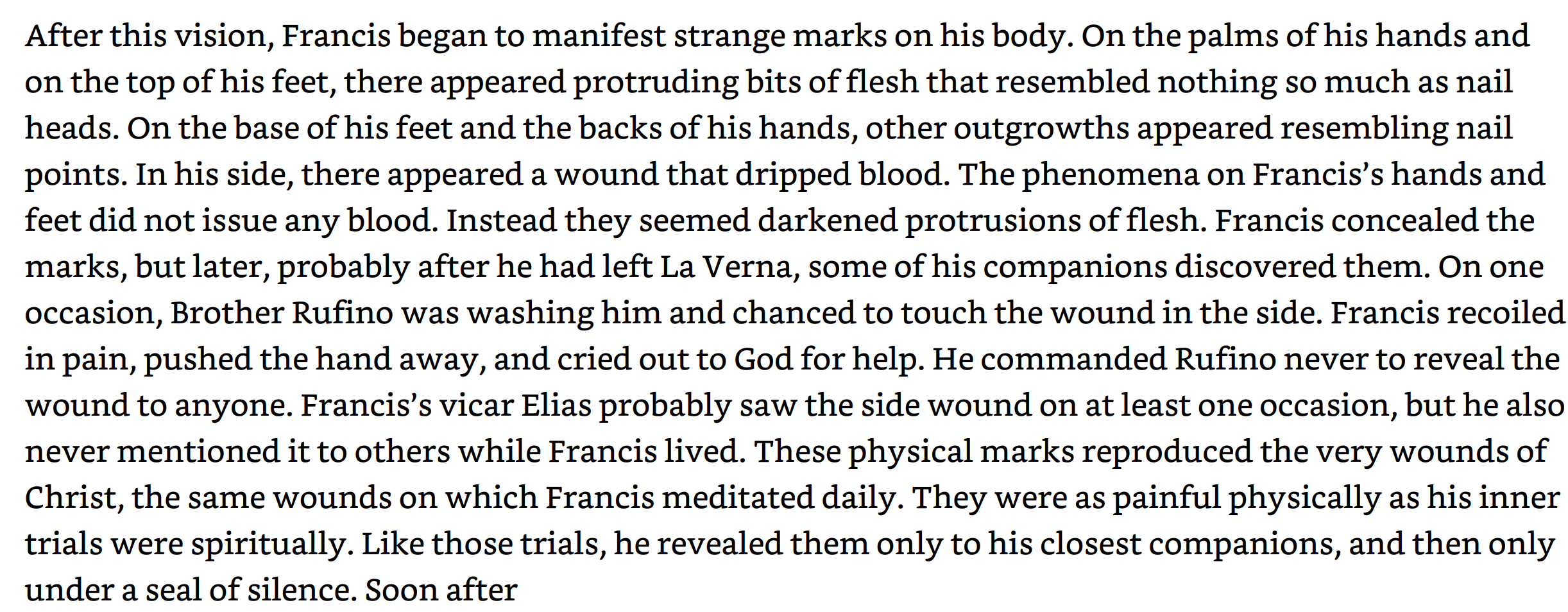
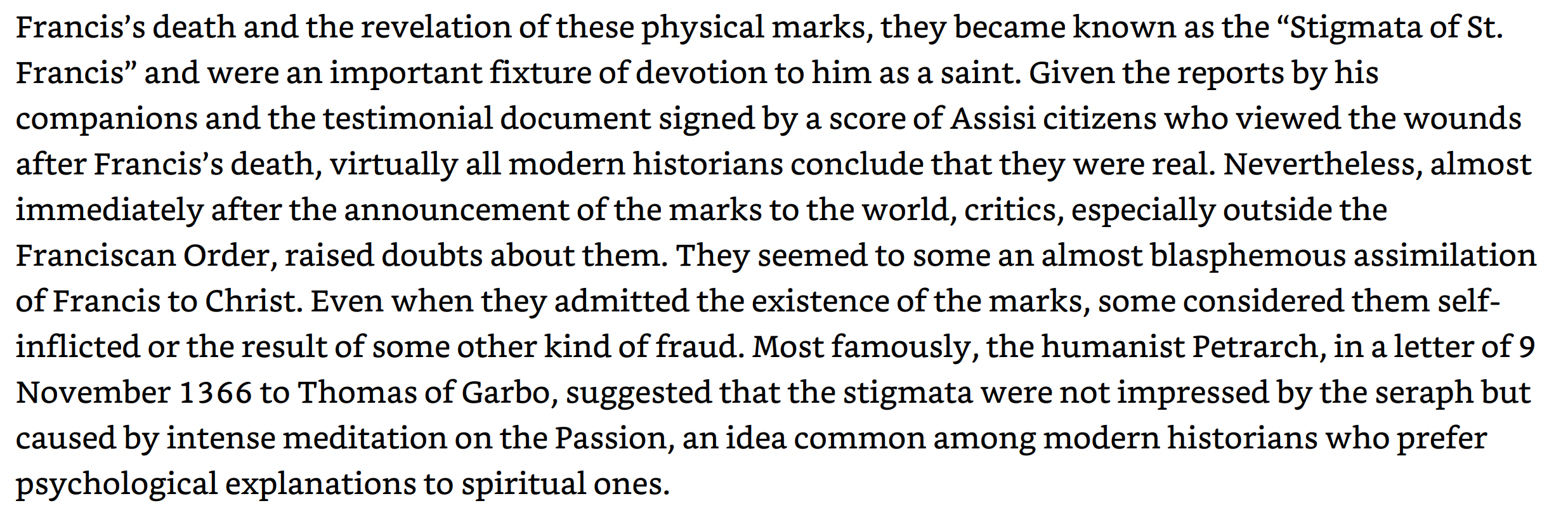
Following this vision, which occurred near the end of his life, Francis received the stigmata — the marks of Christ in the same place where Jesus was wounded on the cross. I had always imagined them to be open wounds, but Thompson says this was not so:
Last word:

Glory to God in all his saints, in whatever church and confession they can be found! I owe my visit to Assisi to Simone Pillon, a great Catholic and former Italian senator, who hosted a conference at which I spoke. There I met some wonderful young Italian Pentecostals, who were on fire for the Lord. The whole weekend was a great blessing.
(A second newsletter will follow soon today… .)
I’m happy that you read my dear friend Fr Augustine’s very scholarly biography. My husband and I read early drafts as he is perhaps our closest friend. He introduced us 45 years ago, assisted at our wedding as a deacon, baptized our children and flew to Croatia to marry our daughter 12 years ago. I think you might enjoy an earlier work by him - “Cities of God,” about the intertwining of religion and communal government in medieval Italy, lay saints and popular piety.
Thank you for sharing a brief lesson on Saint Francis of Assisi! Interestingly, I got a text from a friend as I was reading this article. She had just read in Time magazine about the rise in people purchasing spells from witches on Etsy.
“Etsy has evolved into the go-to site for spell casting services. And although Etsy banned the sale of such services in 2015, spells can still be purchased on the platform under
‘entertainment services.’ The Etsy witch is the latest iteration of people looking for assistance from the divine in a period of unrest.”
The authors conclude that it’s Trump‘s fault, of course, as illegal immigrants are seeking protection from ICE raids along with brides seeking good weather for their weddings.
Sigh.
But while the world is (re)discovering the reality of spiritual power, we Christians know better. We are not unaware of the enemy’s schemes, as apostle Paul writes.
Words have power. And Scripture is the living word, our Lord Jesus Christ. This passage from Fr Augustine’s book is a beautiful reminder to start my day, “For Christians of his age, the words of Scripture were not merely didactic reminders of past events or moral norms. As divine words, they were a locus of power. Merely pronouncing them… put demonic powers to flight.”
So we pray divine words. Speak them. Meditate on them. Memorize them. And even carry them with us, as Francis advised.
I don’t know about the other readers here, but I’m finding more and more opportunities to use divine words to put demonic powers to flight.
The Lord bless and keep you, Rod.